PI OLEDB Enterpriseでプレースホルダ(?)を使用することがあります。
たとえば以下クエリです。
SELECT ea.Name, s.Value
FROM [OSItest].[Asset].[ElementHierarchy] eh
INNER JOIN [OSItest].[Asset].[ElementAttribute] ea ON ea.ElementID = eh.ElementID
INNER JOIN [OSItest].[Data].[Snapshot] s ON s.ElementAttributeID = ea.ID
WHERE ea.Name = ?
この?には属性名が入ります。
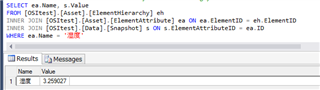
以下はPI SQL Commanderで’湿度'を指定した場合の結果です。
プレースホルダをテストしたくても、PI SQL Commanderでは使えなかったので、C#でテストしました。 (コンソールアプリです)
using System;
using System.Collections.Generic;
using System.Linq;
using System.Text;
using System.Threading.Tasks;
using System.Data.OleDb;
using System.Data;

namespace PIOLEDBEnterpriseTest
{
 class Program
 {
 static void Main(string[] args)
 {

 String strServer = "khashimotoe6440";
 String connectionstring = "Provider = PIOLEDBENT; Data Source = " + strServer + "; Integrated Security = SSPI;" ;
 String cmdstring = @"
 SELECT ea.Name, s.Value
 FROM [OSItest].[Asset].[ElementHierarchy] eh
 INNER JOIN [OSItest].[Asset].[ElementAttribute] ea ON ea.ElementID = eh.ElementID
 INNER JOIN [OSItest].[Data].[Snapshot] s ON s.ElementAttributeID = ea.ID
 WHERE ea.Name = ?
 ";
 OleDbConnection Cnn = new OleDbConnection(connectionstring);
 Cnn.Open();
 OleDbCommand Cmd = new OleDbCommand(cmdstring, Cnn);
 Cmd.Parameters.AddWithValue("@p1","湿度");
 OleDbDataAdapter da = new OleDbDataAdapter(Cmd);
 DataSet ds = new DataSet();
 da.Fill(ds, "X");
 int num = ds.Tables["X"].Rows.Count;
 for (int i = 0; i < num; ++i)
 {
 Console.WriteLine(ds.Tables["X"].Rows[i].ItemArray[0] + " : " + ds.Tables["X"].Rows[i].ItemArray[1]);
 }
 Console.Read();
 }
 }
}
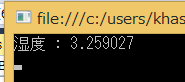
実行すると、PI SQL Commanderと同じ結果が得られます。
さて、ここでea.Name = ?と1つのアイテムなので、問題ないのですが、属性名をinを利用して複数指定する場合、問題が出てきます。
WHERE ea.Name in (?)とし、Cmd.Parameters.AddWithValue("@p1","湿度,温度");としても動作しません。
解決策は以下に書かれていました。
http://stackoverflow.com/questions/1747452/parameters-in-query-with-in-clause
よって、上記リンクのように?,?と複数のプレースホルダを指定するか、in (クエリ)とする方法が考えられます。
?,?と複数のプレースホルダを用意する場合
 WHERE ea.Name in (?,?)
Cmd.Parameters.AddWithValue("@p1","湿度");
Cmd.Parameters.AddWithValue("@p1", "温度");
inの後ろにクエリを書く場合(この場合プレースホルダは置きません)
SELECT ea.Name, s.Value
FROM [OSItest].[Asset].[ElementHierarchy] eh
INNER JOIN [OSItest].[Asset].[ElementAttribute] ea ON ea.ElementID = eh.ElementID
INNER JOIN [OSItest].[Data].[Snapshot] s ON s.ElementAttributeID = ea.ID
WHERE ea.Name in (
 SELECT ea.Name
 FROM [OSItest].[Asset].[ElementHierarchy] eh
 INNER JOIN [OSItest].[Asset].[ElementAttribute] ea ON ea.ElementID = eh.ElementID
)
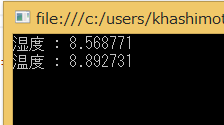
上記2つとも動作します。